

Artificial intelligence (AI) is rapidly transforming the accounting and auditing profession. While AI offers opportunities to improve audit quality, efficiency, and risk detection, it also raises important questions about professional skepticism, trust, accountability, and human judgment. As firms increasingly integrate AI into audit and assurance processes, accountants must determine how to balance technological capabilities with professional responsibility.
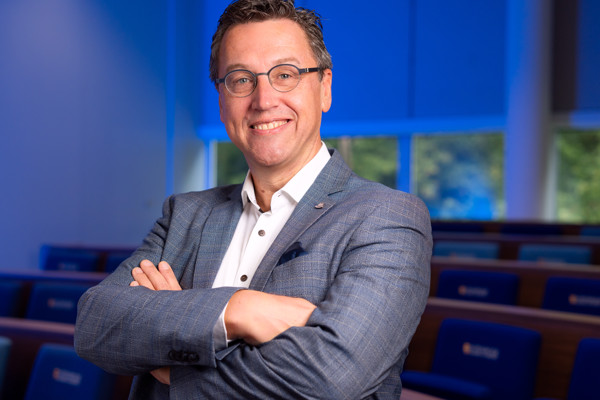
In a previous article, Arno Schalck, Group CIO at PIA Group, and Prof. Dr. Niels van Nieuw Amerongen RA of Nyenrode Business University discussed the five major shifts in auditing driven by AI. In this article, they examine the implications for quality, trust, and professional skepticism. Their discussion is rooted in a fundamental concern that many organizations are currently facing: how do you safeguard quality in a world where AI is becoming an integral part of business processes?
More checks mean better quality, right?
“Even if only 90% of the quality checks are correct, the fact that they are being performed is already an improvement over the past.” — Arno Schalck
At first glance, the answer seems straightforward. AI can review and verify far more information than humans can. While accountants traditionally have to make choices about what to examine and what to leave unchecked, technology can perform large-scale reviews across entire datasets. In principle, this opens the door to a higher level of quality.
Schalck sees this happening in practice. He describes how PIA Group increasingly performs quality checks that simply could not be completed in the past due to time constraints. Even when those checks are not perfect, they still create value.
He offers a concrete example: “In some cases, we're talking about hundreds or even more than a thousand checks on a single engagement file. In the past, many of those checks were never performed or were merely ticked off as completed. AI can now carry out those reviews consistently. It doesn't necessarily result in immediate time savings, but it creates a different kind of quality—more signals, greater visibility, and increased consistency.”
Van Nieuw Amerongen agrees and places this development in a broader context. “AI can continuously perform analyses at scale without distraction. In theory, that makes it possible to work more comprehensively and accurately than ever before. Technology can operate 24/7, while people get tired, become distracted, and occasionally need sleep.”
Yet, according to him, that is also where the downside begins.
What is automation bias and why does it matter for accountants?
“AI teaches us many things, but it also causes us to unlearn certain skills.” — Prof. Dr. Niels van Nieuw Amerongen RA
As technology becomes more capable, human behavior changes as well. One of the greatest risks highlighted during the discussion is automation bias, the tendency for people to place excessive trust in technological outputs without evaluating them critically.
Van Nieuw Amerongen is direct about this concern: “AI can do a great deal, but it also has a psychological effect on users. It teaches us many things, but it also causes us to unlearn certain skills.”
Critical thinking under pressure
According to him, some skills are already showing signs of erosion. Writing ability is one example, but an even more important concern in this context is critical thinking.
Van Nieuw Amerongen explains: “When information is presented in a ready-made format - structured, logical, and persuasively written - it becomes tempting to accept it at face value. This is especially true when AI creates the impression that it knows what it is talking about. Technology can easily make its users complacent.”
Schalck recognizes this phenomenon and notes that it is reinforced by the way some AI tools are designed. “Systems like ChatGPT are designed to respond in a positive and affirming manner. As a result, users are unconsciously encouraged to build on what is being said. You have to explicitly ask AI to challenge your assumptions. Otherwise, it will often agree with you.”
“You have to explicitly ask AI to be critical. Otherwise, it will simply agree with you.” — Arno Schalck
The risk is not necessarily that AI makes mistakes. The greater risk is that people become less inclined to actively look for them.
Who remains responsible when AI is used in an audit?
For that reason, both experts emphasize that responsibility always remains with the accountant. This is not merely a matter of professional ethics; it is also a formal requirement of the profession. Even when AI supports a significant portion of the work, the individual signing the audit opinion remains accountable for the outcome.
“Responsibility remains with the signing accountant.” — Prof. Dr. Niels van Nieuw Amerongen RA
Schalck compares this issue to self-driving vehicles. In both cases, the key question is who remains responsible when technology is involved in decision-making. “Ultimately, the person using the system remains responsible for how it is applied. The same principle applies in accounting. If you choose to work with technology, you must also take responsibility for understanding it and using it correctly. Technology can never serve as an excuse for mistakes.”
When is AI “reliable enough”?
A fundamental question remains: when can AI truly be trusted? Van Nieuw Amerongen explains: “Even if a tool performs well based on historical data, that does not automatically mean it will be reliable in new situations. Models evolve, datasets change, and every client environment is different. As a result, a certain degree of uncertainty will always remain.”
Schalck adds another important perspective. “In many situations, it is difficult to measure whether something is objectively correct, particularly when interpretations or recommendations are involved. If AI is then used to validate AI, there is a risk of creating a closed system in which errors become difficult to detect.”
He does not see the solution in complete automation, but rather in maintaining a human-in-the-loop approach. “AI is not a substitute for professional judgment. If anything, it increases the need for it. Accountants must continue to evaluate, provide feedback, and guide the process, not merely as a final review step, but as an integral part of the workflow. That requires both time and discipline.”
Professional skepticism redefined
One of the more interesting conclusions from the discussion is that AI does not replace professional skepticism; it changes how it is applied. AI can analyze large volumes of data and identify risks, patterns, and relationships that might otherwise go unnoticed. According to Van Nieuw Amerongen, this can help accountants view situations more broadly and encourage more integrated thinking.
At the same time, this creates a potential risk. If professionals place too much trust in AI-generated analyses and conclusions, they may become less critical in their own evaluations.
According to Schalck, it is essential to distinguish between tasks that can be delegated to AI and those that will always require human judgment. Less time will be spent gathering and processing information, and more time will be devoted to evaluating, interpreting, and challenging the results.
These are areas where there is no room for complacency. Critical thinking, experience, and professional judgment remain indispensable. The shift is not toward less work, but toward different work.
Can AI detect fraud effectively?
This tension becomes particularly visible in the area of fraud detection. Van Nieuw Amerongen points out that fraud is inherently difficult to detect. Fraud schemes are often rare, complex, and highly creative, making them difficult to capture through recognizable patterns.
As he explains: “Fraud is a rare event. That principle continues to be reflected in much of the research on fraud detection. Detecting rare events is extremely difficult because accountants have a limited base of direct experience with them.” This presents a challenge for AI, which fundamentally operates on patterns and probabilities.
One possible solution is to combine specialized expertise - such as fraud specialists within audit teams - with data-driven technologies. Such an approach blends human intuition and experience with analytical capabilities. Even then, however, there is no universal solution, since fraud can take many different forms.
Quality emerges through combination
The discussion makes one thing particularly clear: in the age of AI, quality does not emerge automatically from technology alone. Quality arises from the combination of:
- technology that identifies signals and anomalies;
- people who interpret those signals;
- and organizations that establish the appropriate governance, controls, and frameworks.
AI helps us see more, but seeing is not the same as understanding. And understanding is not the same as exercising judgment. That is where the accountant remains indispensable.
Key takeaways
- AI can improve audit quality through broader and more consistent testing.
- Professional skepticism becomes more important, not less.
- Automation bias is a growing risk for accountants.
- Responsibility remains with the signing accountant.
- Human oversight remains essential when using AI in audit and assurance engagements.
- AI can support fraud detection but cannot replace professional judgment.
Looking ahead
In the next article, Schalck and Van Nieuw Amerongen will explore education, career development, and the future organization of the profession in a world where humans and technology work increasingly closely together. They will address questions such as:
- How do we prepare accountants for this new reality?
- Which skills will become more important, and which less so?
- And what will the accountant of 2030 look like?
Looking back
Prof. Dr. Niels van Nieuw Amerongen RA is the PIA Group Netherlands Professor of SME Accounting at Nyenrode Business University. He is affiliated with Nyenrode’s Faculty Expertise Center for Accounting, Auditing & Control. The chair held by Van Nieuw Amerongen is sponsored by PIA Group.
More information about sponsored chairs
Arno Schalck is Group Chief Technology Officer of PIA Group.
PIA Group is an accounting and advisory group focused on serving small and medium-sized accounting firms. Its approach combines deep expertise in areas such as accounting, audit, tax advisory, and business consulting with a strong commitment to personal service. Since its founding in 2012 by Steven Brouckaert, PIA Group has grown into an international organization operating across the Netherlands, Belgium, and Luxembourg. The group comprises more than 75 offices and employs over 3,000 professionals, including more than 1,450 in the Netherlands.