Many organizations chase radical innovation but unknowingly reward the opposite: predictability, control, and short-term results. Emeritus professor of innovation Jeff Gaspersz calls this the biggest enemy of innovation.
Based on the book Leidinggeven aan Innovatie (Leading Innovation), Gaspersz shares three key insights that help leaders make innovation a permanent part of culture, structure, and collaboration.
"When you build curiosity and experimentation into the fabric of your culture, you no longer have to push innovation. It becomes the natural output of an organization that never stops learning."
1. The leader as chief curiosity builder
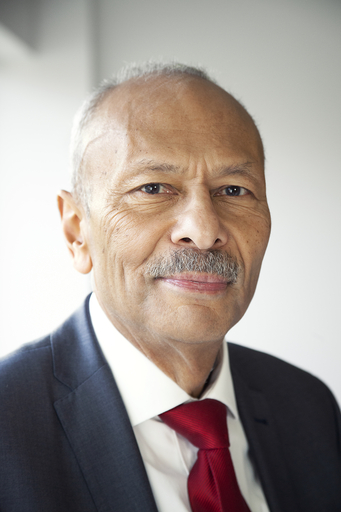
Innovation is often treated as a technical process: a funnel, a roadmap, a budget. But Gaspersz argues the real engine is somewhere else entirely: curiosity.
"It may sound soft, but curiosity is actually a hard requirement for strategic renewal. Organizations that don't make room for questions stay trapped in their existing assumptions."
That's why, Gaspersz says, leadership needs to shift from giving answers to asking questions: "Your most important job as a leader is to create an environment where asking questions matters more than having the right answers."
That takes more than a motivational speech — it takes a culture where experimentation is safe and the unexpected isn't immediately punished.
2. From one-off events to lasting change
The second insight hits on a classic trap. "The biggest enemy of innovation? Treating it like a project with a start date and an end date." Many organizations bolt innovation on as an add-on: a brainstorming session, an innovation program, a separate team tasked with figuring it out.
But real innovative capability doesn't come from scattered initiatives. It comes from building a foundation where renewal is the standard output. Not a series of one-off wins, but a continuous process of transformation.
"For leaders, that means weaving innovation into the organizational structure, removing the structural barriers that block experimentation, and resisting the urge to chase short-term wins."
3. From organizational ego to network intelligence
While the first two insights look inward, the third looks outward. "In times of major change, isolation is the biggest enemy of progress." Innovation, Gaspersz argues, is no longer a solo achievement, it's the product of an ecosystem. "Co-creation isn't a nice-to-have. It's the only way to untangle the complexity of our time."
That requires leading across boundaries: exchanging value with partners, customers, and outside experts — and deliberately seeking out the friction between different perspectives. "That friction is exactly where the energy for real innovation comes from."
Gaspersz highlights a concept introduced by Prof. Annemieke Roobeek: the "weaver": a networking leader who connects people, organizations, and technologies. "Where traditional structures get stuck in silos, the weaver gets innovation moving again."
Innovation as a leadership discipline
All three insights point to the same conclusion: innovation isn't primarily about tools or ideas — it's about leadership. Organize curiosity. Embed renewal. Make collaboration strategic. As Gaspersz puts it: "Innovation isn't a project. It's a transition."
Related programs
-
Transition, Innovation and Impact
Start date: Autumn 2027Language:- Dutch
Location:- Breukelen
This module is only given in Dutch. Please visit our Dutch site.
View program