
Many organizations say they give talent room to thrive. But as soon as talent does things differently - asks questions, challenges norms, charts its own course - that space becomes uncomfortable. This very tension was at the center of a lecture by Prof. Dr. Lidewey van der Sluis in the Behavior, Culture & Governance Program for board members and executives.
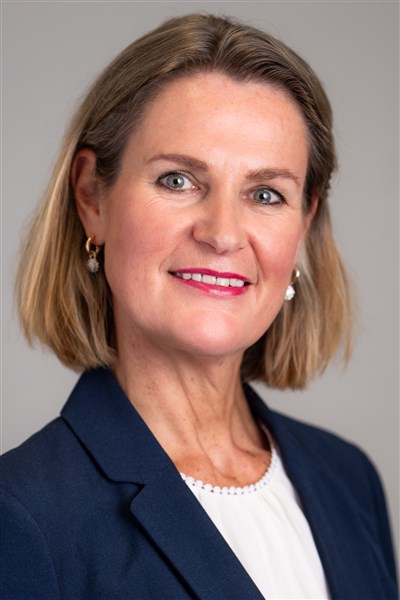
“Exceptional performance rarely comes from conforming to standards of perfection within existing structures,” says Van der Sluis, Professor of Strategic Leadership and Talent Management. “It often comes from having the courage to challenge established patterns and pursue an independent path grounded in personal conviction.”
She points to Jutta Leerdam and what her Olympic gold medal reveals about how organizations can engage with independent-minded talent.
The day after gold
The day after Leerdam skated her phenomenal race, Van der Sluis stood before participants in the Behavior, Culture & Governance Program. The impact of the previous day’s achievement was still palpable. For her, it was the perfect case study to illustrate how leaders can shape behavior and culture within their own organizations.
What can we learn from someone who operates within a system, yet clearly maintains her own profile and direction?
Performing outside the format
Leerdam did not naturally fit the traditional model of the speed skating world. Rather than fully conforming to an existing team structure, she chose her own path. She organized her own team, coaching, and approach in a way that matched her ambitions and personality.
That led not only to a gold medal, but also to resistance. Van der Sluis explains: “Anyone who positions themselves outside the system exposes the fact that the system does not work optimally for everyone. And we must not forget that systems are meant to serve people, not the other way around.”
“People who challenge systems are highly valuable. And confronting. But it is precisely through them that renewal becomes possible.”
The reflex to avoid risk
Most organizations are designed to operate predictably and minimize risk. Understandably so, Van der Sluis notes. Yet this makes them less suited to what she calls “paradise birds” like Jutta Leerdam, individuals who do not flourish within standard procedures, roles, and expectations.
For organizations, this is a mirror. Whom are we truly willing to give space to? The reflex often provides the answer: those who comply, adapt, and blend in. After all, “this is how we do things here.”
“That is a choice,” says Van der Sluis. “But it is a choice for the familiar over the innovative. As a result, a great deal of human potential is lost. If you push people with a distinct profile back toward the average, you shortchange both them and your organization. You lose the power of independence. You lose ‘the icing on the cake,’ as a CEO recently put it. You are left with cake alone. The ordinary.”
Frameworks and freedom: Nyenrode in practice
What does this look like in practice? According to Van der Sluis, Nyenrode Business University sets an example. She reflects on her own early years at Nyenrode:
“There was no detailed plan or budget for a chair. There was, however, an urgent issue. And there were clear criteria. Nyenrode wanted to do ‘something’ with the war for talent and gave me the space to shape that within defined parameters.”
That combination of structure and freedom enabled her to build the field of Strategic Talent Management in close connection with entrepreneurs and leaders in practice.
A distinctive strength
“Having space in your work does not mean you are on your own. It means you are entrusted with the responsibility to build something that truly matters. The opportunity to develop expertise in your own way is, in my view, a distinctive strength of Nyenrode. Not an exception, but a deliberate strategic choice.”
That the lecture resonated, coming just one day after Leerdam’s golden race, became clear afterward. A board member referred to Van der Sluis as “the Jutta Leerdam of Nyenrode.” She smiles at the remark but takes it seriously. “Of course that compliment meant a great deal to me. But the more I reflected on it, the more I realized it was - perhaps above all - a compliment to Nyenrode.”
“Nyenrode gave me the opportunity to grow the field and to continue developing myself. And when I step into the classroom, I am ready. Readiness is a success factor, I know that.”
The question for leaders
The lesson from Jutta Leerdam is not about sports. It is about focus, mindset, and quality. And about leaders and peers who are asked to allow independent thinking on the path to top performance.
Van der Sluis concludes with a reflection for every board member and executive: “A ‘Jutta Leerdam type’ combines strength and star quality in one. Every organization needs this type to continuously improve and renew. If they work in your organization, you have talent in your midst. Give them space. Allow them - within boundaries - to push the boundaries. And cherish their strength.”
The Behavioral & Cultural Governance Program is designed for senior executives, board members, and strategic advisors who are responsible for leading organizations in complex and dynamic environments.
The program offers deep insight into the organization’s ecosystem: the interconnection between people, systems, values, structure, and growth.
About Prof. Dr. Lidewey van der Sluis
Prof. Dr. Lidewey E.C. van der Sluis is Professor of Strategic Talent Management and Organizational Leadership at Nyenrode Business University. She brings a fresh, economic perspective to traditional organizations, leadership, and labor relations and specializes in organizational design, talent management, strategic HR, and the social and psychological dimensions of organizations and employment relations.
Related programs
-
Behaviour, Culture & Governance
Start date: October 26, 2026 and April 12, 2027Language:- Dutch
Location:- Breukelen
Successful organizations do not merely manage figures and plans; they understand their organization as a living system. In an era of continuous change, this requires leaders who can handle uncertainty, tensions, and conflicting interests.
View program