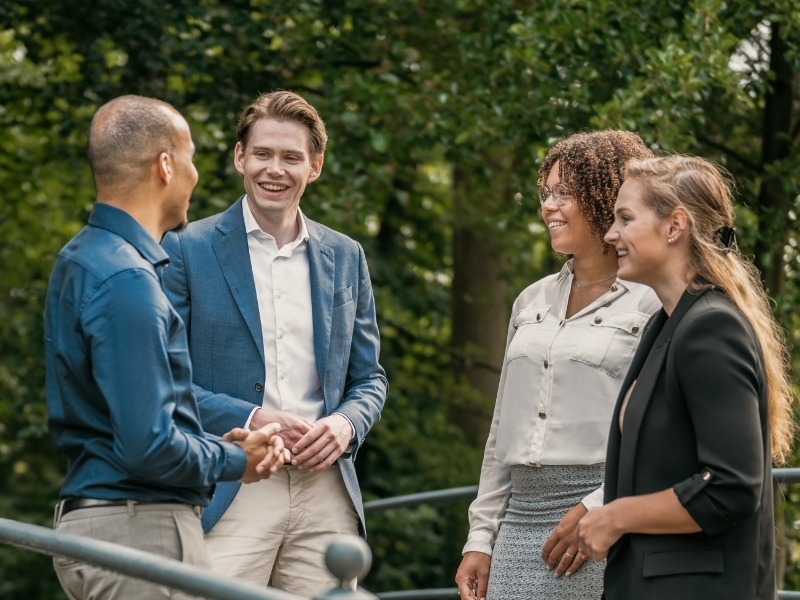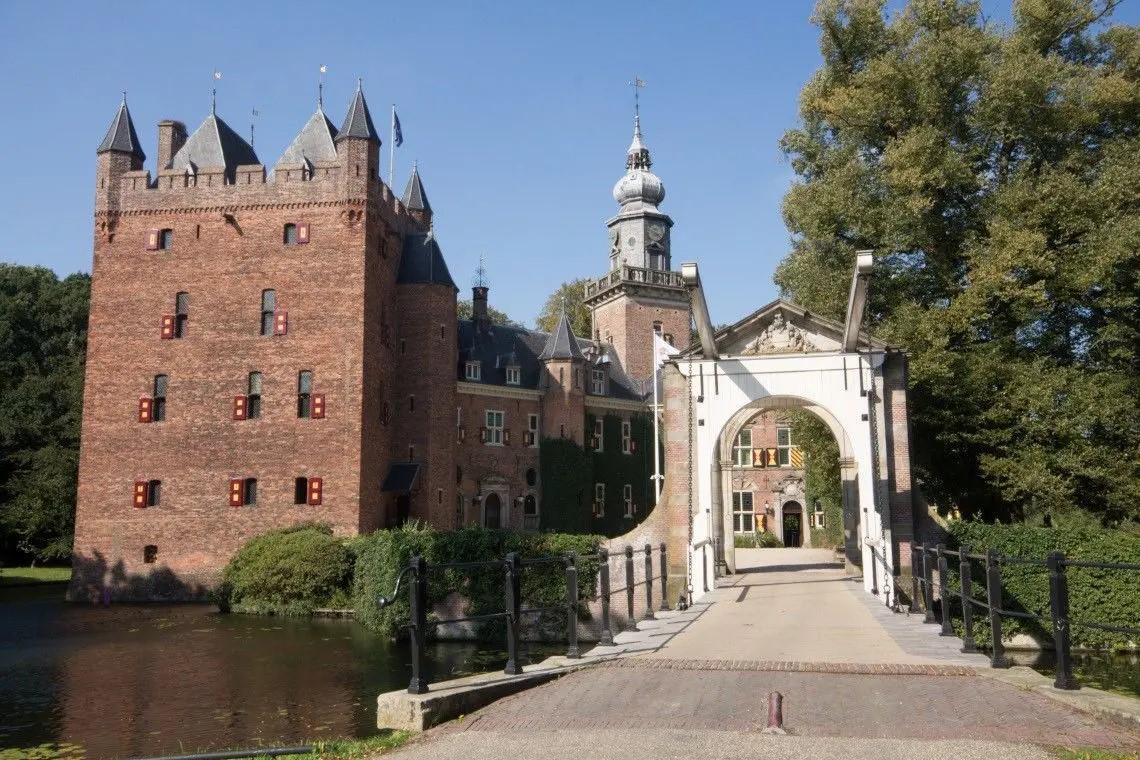
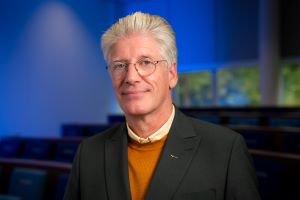
Controllers are increasingly becoming part of management teams, where they play an important advisory role. Personal characteristics and skills largely determine how effectively they can fulfil this position. Professor Hans ten Rouwelaar has been researching this topic for many years. In his farewell lecture, he explains why controlling remains, above all, a people-oriented profession.
What particularly fascinates Ten Rouwelaar is the extent to which the role of controllers has changed in recent years. Their responsibilities have broadened considerably. “That is because the world around us is changing rapidly and becoming increasingly complex and uncertain. Take the automotive industry, for example. Car models used to evolve relatively slowly, and people often drove the same vehicle for ten years or more. Today, technological developments follow one another at a much faster pace. As a result, the automotive sector is under constant pressure to innovate and adapt.”
 Beyond Finance
According to Ten Rouwelaar, controllers now look beyond purely financial considerations. Environmental and social implications also play a role in management decision-making. “Controllers advise management on the direction of the organization, investment decisions, and their expected returns. This can make a controller’s work quite complex. Consider the use of recyclable materials, for example. What value might these materials still have in the future, and how do you incorporate that into your calculations?” Developing future scenarios is also an important responsibility, he says. “Controllers are increasingly expected to think about how an organization can remain successful over the long term.”
The Controller as Mediator
According to Ten Rouwelaar, the modern controller is a mediator: a connector who independently gathers information, looks beyond the numbers to understand the story behind them, and brings different stakeholders together. “This requires a new set of skills. Controllers are often somewhat introverted, but anyone who wants to influence decisions must learn to speak the language of management. The ability to build connections and persuade others has become indispensable. That is why Nyenrode’s Controlling programs place significant emphasis on personal growth, transformation, and talent development.”
Strategic Leadership Qualities
In his farewell lecture, Ten Rouwelaar also addresses the rise of artificial intelligence. “I believe AI can be a valuable support tool for controllers, particularly when it comes to repetitive tasks and data analysis. However, interpreting that data and balancing competing interests remains a human responsibility. My colleague Nick van Dam identifies five strategic leadership qualities that are essential in this regard: instinct, intuition, imagination, integrity, and identity. I fully agree. These are the qualities needed to help shape the future of an organization.”
Staying on Course Together
Ten Rouwelaar compares the controller to an aircraft’s co-pilot and the manager to the pilot. In his view, both roles are equally important. “Few people would feel comfortable boarding an aircraft with only a pilot in the cockpit because the co-pilot position had been cut to save costs. An aircraft can stay on course perfectly well on autopilot, but what happens if the destination airport suddenly becomes inaccessible due to wildfires or dense fog and the flight must be diverted? Or if the equipment suddenly fails or provides incorrect information? It is precisely in situations like these that human judgement becomes indispensable. That is why human-centred controlling remains essential.”
Straight from the Heart
Ten Rouwelaar’s farewell is especially meaningful for two reasons. First, he was appointed Professor on 28 August of this year. “I have worked at Nyenrode for 26 years, much of that time as an Assistant and Associate Professor. Being able to take this step at this stage of my career is a great honor.” Secondly, he deliberately chose to say farewell through a lecture rather than a traditional valedictory address. “Providing excellent education has always been at the heart of my career. Teaching comes straight from the heart, and I wanted to say goodbye in the same way.”
Related programs
-
Master of Science in Management (MSc) | Full-time
Start date: August 2027Language:- English
Location:- Amsterdam
- Breukelen
16-month full-time program designed to develop academic and professional skills. With a strong focus on practical business knowledge, Nyenrode prepares students for global careers while fostering personal growth.
View program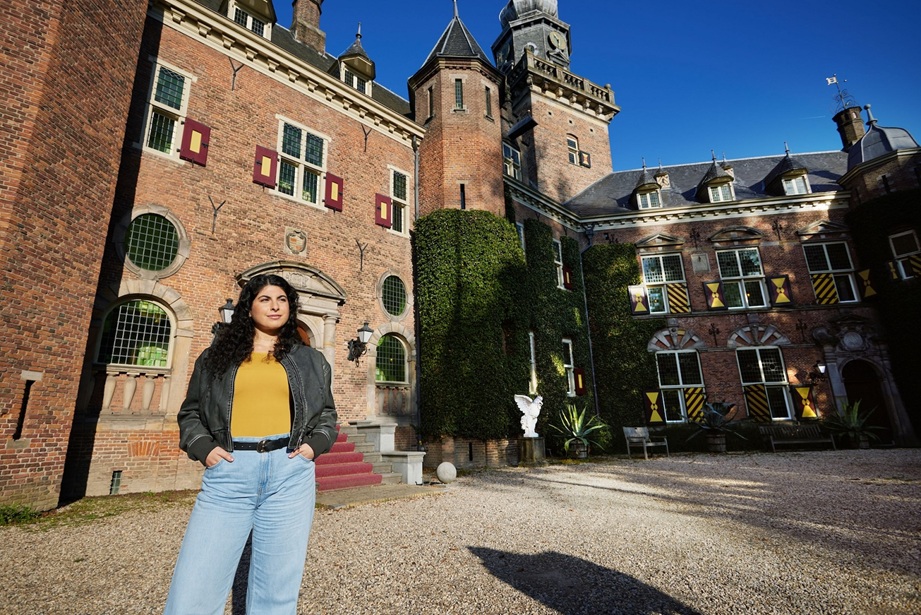
-
Part-time PhD Program Nyenrode
Start date: September 1, 2027Language:- English
Location:- Breukelen
Obtain your PhD degree at Nyenrode Business Universiteit. Develop your academic, research and personal effectiveness skills. Focus on both academic rigor and practical and societal impact.
View program
-
English (Pre-) Master of Science in Accountancy | Part-time
Start date: 7 May 2027Language:- English
Location:- Amsterdam
Learn modern accountancy practices and elevate your career with Nyenrode.
View program