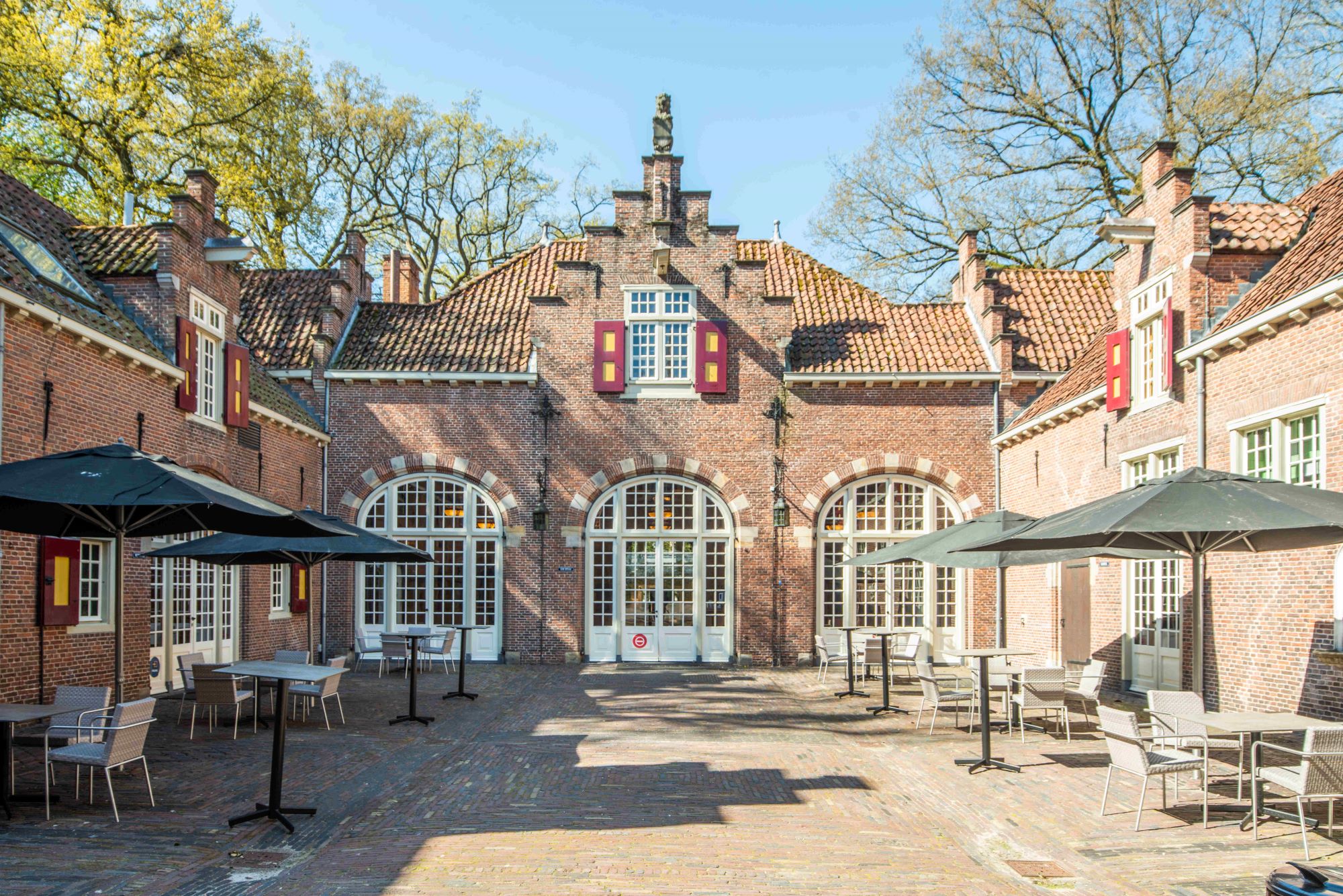
What happens to ESG when regulations are being scaled back? For seven organizations, it is not a reason to stop. They have chosen to anchor ESG strategically in their business. In a research program at Nyenrode Business University, they explored how ESG, digitalization, and systems thinking can jointly lead to concrete long-term value creation. “ESG only becomes truly interesting when it is no longer about compliance, but about choices that matter.”
The introduction of the EU Omnibus regulation in 2025 caused a noticeable shift for many organizations. In practice, less regulation often means less attention to ESG (Environmental, Social and Governance). However, that is not true for everyone. A growing group of organizations is looking beyond compliance and sees ESG as a strategic opportunity to create greater business value.
“We see that organizations that approach ESG purely as an obligation come to a standstill as soon as the pressure decreases,” says Prof. Dr. Albert Plugge, who is involved in the ESG research program. “But the organizations we supported in this program asked a different question: how can ESG help us remain future-proof?”
From obligation to strategic issue
The ESG research program, initiated by Plugge and Dr. Diane Zandee, brought together seven diverse organizations: a mix of public and private parties, ranging from municipalities to financial and professional services firms.
One principle was central: ESG and business strategy are not separate worlds. On the contrary, in combination with digitalization and systems thinking, they can reinforce one another.
“ESG is often seen as something ‘next to’ the business,” says Plugge. “We examined what happens when you consider ESG an integral part of your strategic choices.”
The program ran from February through December 2025 and consisted of nine intensive days at Nyenrode, supplemented by four individual workshops per participating organization. Scientific and practical insights were central in the mornings; in the afternoons, participants worked on their own cases.
It starts with one clear dilemma
“Long-term value creation” is a rather abstract concept. That is why the program began with formulating one concrete ESG dilemma per organization—a question that touches daily operations as well as strategic direction.
A good example is the Municipality of Amsterdam. They entered the program with the question of how to structurally make their IT strategy more sustainable. Digitalization is indispensable for the city, but it also brings a growing ecological impact.
Plugge explains: “That dilemma led to concrete choices: from architecture principles and data reduction to policies on sustainable AI, CO₂ impact measurement, and conscious procurement, including a Fairphone-only policy. ESG thus became not an additional layer, but a guiding principle for existing strategic decisions.”
What surprised the researchers most
Although the dilemmas differed per organization, several striking insights kept recurring throughout the year. For Plugge and Zandee, it became clear that success with ESG lies less in models or frameworks and far more in leadership, mindset, and decision-making.
Thinking long term requires courage
The participating organizations proved willing to invest without immediate returns. Innovation takes time, and benefits often follow later. “Long-term thinking was never used as an excuse to do nothing,” says Plugge. “On the contrary, organizations made very deliberate choices precisely because they know these will ultimately pay off.”
Top-level support is not a luxury but a prerequisite
A second insight: without support from the top, ESG does not move beyond good intentions. “Support from the board and executive leadership was an absolute must in all successful cases,” says Plugge. “Without that commitment, ESG remains something driven by enthusiastic individuals rather than the organization as a whole.”
Rethinking makes the difference
Instead of approaching ESG as a constraint, participants increasingly saw it as a driver of their business strategy. “What is critical to success is that the question shifts from ‘how do we comply?’ to ‘how can this help us develop better products, services, and partnerships?’”
Intrinsic motivation accelerates change
The mindset of the participants themselves also stood out. They were intrinsically motivated and approached ESG from a perspective of opportunity. “The energy came from people who asked: what is possible? That positive mindset makes a tremendous difference.”
Systems thinking proves to be more than theory
An important initial assumption was that thinking in ecosystems is a prerequisite for success. The researchers were able to confirm that assumption.
Collaborations emerged not only within organizations, but also between them. For example, the Municipality of Groningen and the Municipality of Amsterdam shared knowledge and experience, while SeerderDeBoer and Nieman Groep collaborated on the impact of ESG on healthcare real estate.
From insight to impact: concrete solutions
The program resulted in tangible outcomes, each rooted in the original dilemma:
- Unigarant developed a sustainable home insurance product in collaboration with supply chain partners. The pilot starts in Q1 2026.
- Municipality of Groningen established an ESG Living Lab focused on making CO₂ reduction, waste reduction, and the creation of work-study positions visible.
- Municipality of Amsterdam translated sustainable digitalization into policy and concrete IT applications.
- Sogeti integrated ESG into its corporate strategy and developed a market proposition focused on employing people who are distanced from the labor market within IT supply chains.
- Nieman Groep launched a research agenda on heat stress and developed a Climate Scan, with pilots starting in Q1 2026.
- SeerderDeBoer developed a hybrid care pathway for heart failure in collaboration with healthcare partners.
- A.A.S. Auto Damage Repair implemented air-drying paints, resulting in lower CO₂ emissions and reduced energy consumption.
ESG as a strategic choice
According to Plugge, the main conclusion of the research program is clear: “Organizations that integrate ESG with their business strategy are able to create concrete value for their customers and for society. Especially when they are supported by scientific insights, digital choices, and smart collaborations within ecosystems. That is how they can remain relevant in a rapidly changing world.”
Related programs
-
Modular Executive MBA in Business & Sustainable Transitions
Start date: spring & autumnLanguage:- Dutch
Location:- Breukelen
For professionals driving sustainable change. The Modular Executive MBA in Business & Sustainable Transitions deepens your expertise in strategy, transformation, and sustainable growth. A flexible, part-time MBA for experienced professionals.
View program
-
Executive Program Energy Transition in Business and Leadership
Start date: November 23, 2026Language:- English
Location:- Amsterdam
- Other...
This executive programme focuses on the development of new business models at a time of massive and disruptive change in the energy market. It has three main parts.
View program
-
Executive Programme Energy Transition and Innovation
Start date: April 5, 2027Language:- English
Location:- Breukelen
- Other...
Get ready for the future of energy – with Nyenrode Business University, RWTH Aachen University of Technology and the International Energy Agency
View program
-
Executive ESG Program
Start date: To be determinedLanguage:- English
Location:- Breukelen
The latest ESG knowledge and insights to transform your organization and be able to increase your positive impact on people, planet and society.
View program