
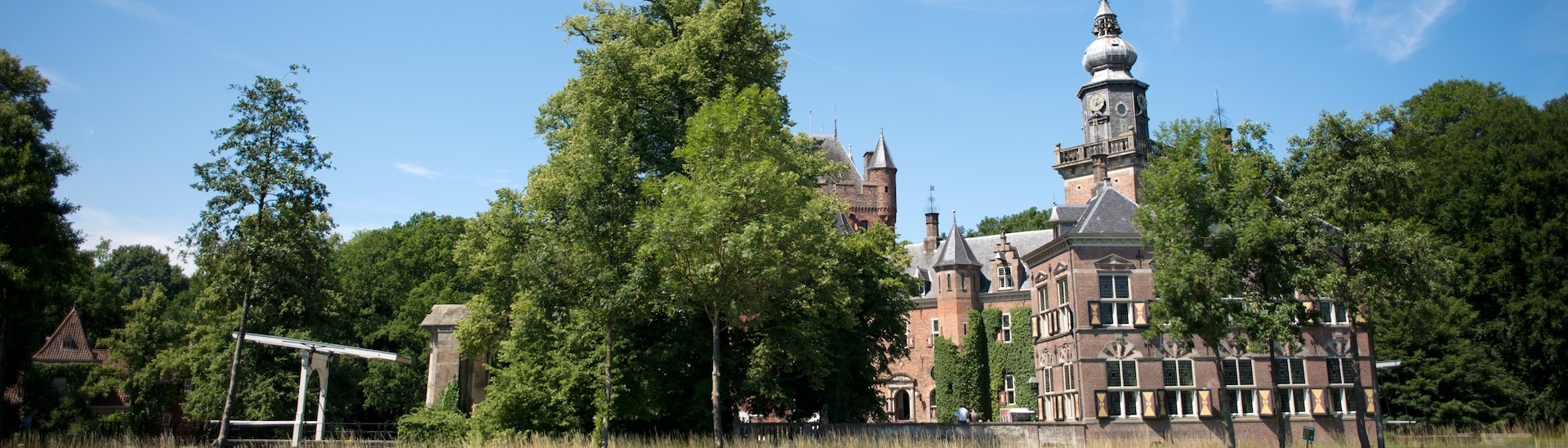
When shareholders are at odds with one another, a board no longer makes decisions, and family members have not spoken to each other in years, the Enterprise Chamber steps in. Three experienced Enterprise Chamber officers discuss conflict, governance, and the art of restoring trust. ‘We do not resolve family feuds, but business conflicts we normally can.’
They are brought in when companies have reached a complete dead-end: either as director, supervisory board member, or share representative. They encounter businesses where brothers no longer speak to one another, co-founders who cannot stand the sight of one another, and organizations where no decisions have been made for years. Yet their work rarely revolves around legal technicalities. Far more often, it is about trust, recognition, and the restoration of governance relationships.
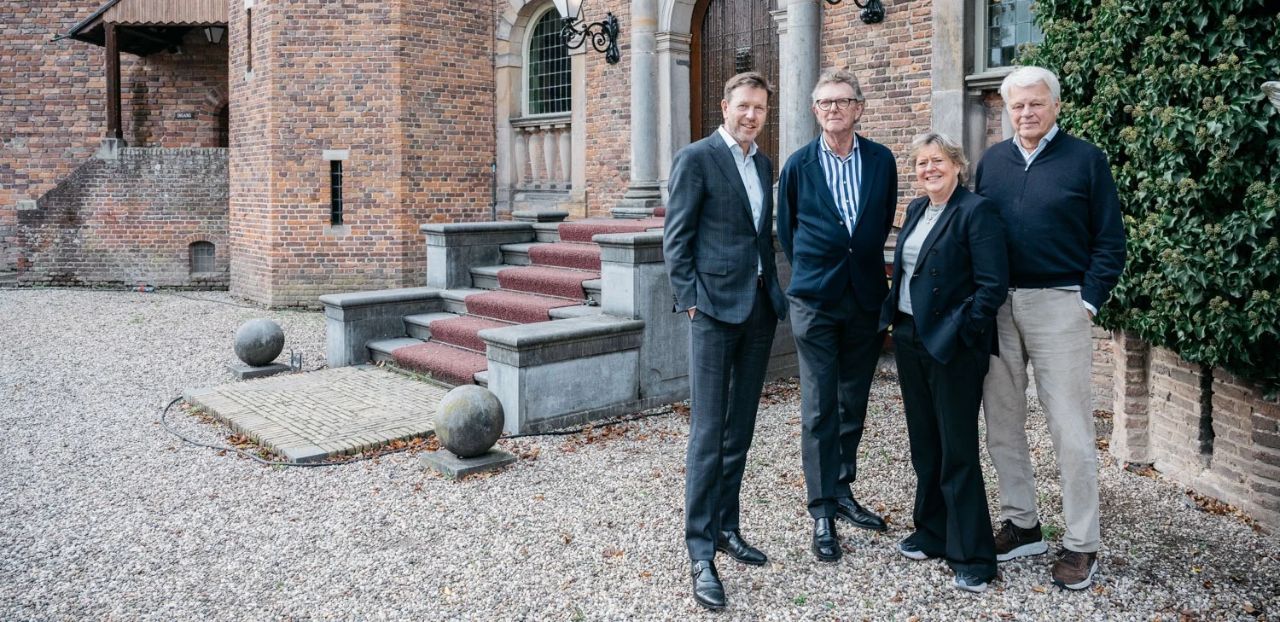 Vincent Moolenaar, business director of board & governance at Nyenrode, spoke with three experienced Enterprise Chamber appointees: Barbara van Hussen, Job van der Have, and John Jaakke. They discuss governance, conflict, mistrust, and the satisfaction of getting organizations out of a dead-end and back on track.
Why would anyone want to become an official of the Enterprise Chamber?
Van Hussen: ‘I first encountered an Enterprise Chamber case through my legal practice. I was sitting at the back of the courtroom and thought: I could solve this. So, I applied. That aspect, solving problems, remains the best part of the job. Look at Vitesse, for example. We literally pulled that club back from the gates of hell. It is thanks to the work of the Enterprise Chamber that the organization still exists today.’
Jaakke: ‘I sometimes compare it to the game Trivial Pursuit, where all the different-colored wedges fit perfectly into that one circle. Legal insight, management experience, psychology, negotiation – everything comes together in this role. From a professional standpoint, that makes it incredibly interesting. It is challenging, but above all, deeply rewarding.’
What is usually at the core of a conflict you are brought in to handle?
Van der Have: ‘That people are no longer talking to each other. Often for years. Judgments and prejudices have taken root. Everything that happens is interpreted through each person’s own frame. Then the lawyers get involved, and the positions become even more entrenched. Eventually, these issues end up before the Enterprise Chamber. What is remarkable is that you might spend an hour and a half with someone, and afterward that person says, ‘That was such a pleasant conversation.’ And yet you have really only asked a few questions. That goes to show how little genuine listening was taking place. Ultimately, it is all about earning trust – from both parties – and maintaining that trust. That is perhaps the most difficult part of the job.’
Jaakke: ‘Sometimes, it is simply a business dispute between reasonable people who have different objectives. But not always. If you dig a little deeper, you often see a lot of emotions. Usually, it ultimately comes down to recognition. Or rather, the lack thereof. You see that all the time in family businesses A father who favors one son over the other. The one who becomes CEO versus the one who gets passed over. Or two founders. I remember someone who said, ‘I am here every morning at 7:30, and he pulls up in his BMW X5 at 9:30.’ Then it is not about that BMW at all. It is about an imbalance in the relationship. About recognition. And everyone remains stuck in their own version of the truth and their own reality.’
Van Hussen: ‘Many parties started their businesses with a brilliant idea and the best of intentions. But reality turns out to be more stubborn than expected, and disputes arise over strategy and direction. And that is when friction sets in. Often, these are successful companies – businesses that are profitable – yet where little thought has ever been given to governance, roles, or strategy.’
Is poor governance not, in fact, at the heart of many conflicts?
Van der Have: ‘You often see that, especially in smaller companies and family businesses. There, governance is sometimes viewed as something for large, publicly traded companies.’
Jaakke: ‘Many companies have no oversight at all. I once handled a case where the supervisory board consisted of a single person. That really says it all. A sound governance structure functions as a crumple zone. It absorbs tension before it leads to a collision. When that is missing, it is an instant recipe for a crash: bang, smash – conflict.’
Van Hussen: ‘And even when there is a supervisory board, it often does not include truly independent individuals, but rather the proverbial former family GP, the notary, and the tax specialist. People with a sort of honorary position; they are doing a friend a favor. Then I sometimes think: you have absolutely no idea what this is actually about.’
At some point, you get approached by the Enterprise Chamber. What are you told when they bring you into a case like this?
Van der Have: ‘The first question is usually very simple: ‘Do you have time?’ Then they determine whether there is any conflict of interest. Sometimes you are asked to serve as a director, sometimes as a supervisory board member, and sometimes as a shareholder representative. It depends on where the problem lies. Ultimately, it always comes down to the same thing: decisions need to be able to be made again. And that is exactly what is often missing. You walk into a situation where no decisions have been made for a very long time. Once you say yes, you receive a ruling, which you then study. At that point, you know only one thing for certain: there is a huge problem. You do not yet know exactly how big that problem is. I always head to that first meeting brimming with curiosity.’
Van Hussen: ‘We are all the kind of people who get a little ‘fired up’ by a mess. Where there is a mess, you can clean things up, bring structure, and create order. Personally, I have a slight preference for the role of director or supervisory board member. That is where you can really make a difference.’
Can you also turn down an assignment?
Van Hussen: ‘I have done that once. It was right after the Vitesse case, which completely consumed me for half a year. I just could not bring myself to take on another complicated case right away. I thought: just give me two squabbling brothers for a change.’
Van der Have: ‘I once turned down a case because it felt too shady. A Dutch holding company, with Russian owners involved, a factory in Kaliningrad, legal proceedings in multiple countries, threats, and opaque financing. It was practically impossible to even secure my own salary. At that point, I thought: this is getting out of hand. I walked away.’
Jaakke: ‘You also have to be honest with yourself. Sometimes it drains your energy immensely. I once had to pull my car over because I was just completely exhausted. The tension was so intense. You are surrounded by people who call each other every name in the book every day. There is no love left. That kind of thing inevitably gets under your skin. When the case was wrapped up, I really had to take a break.’
How do you approach a case?
Jaakke: ‘With a blank slate. That is perhaps the most important lesson. Be careful not to jump to conclusions about how things stand. Reality almost always turns out to be different from what you think. It is like Magritte’s painting of the pipe: Ceci n’est pas une pipe. Things are rarely what they seem at first glance.’
Van Hussen: ‘I do not start by reading through all the files, either. I prefer to talk first. The problem is that everyone has already dug themselves into their own foxhole – helmet on, twigs tucked in for camouflage. And then you have to figure out how to get them out of there. I generally prefer not to speak with the lawyers right away; in my experience, they are not always helpful.’
Jaakke: ‘Exactly. I do not engage in endless correspondence with lawyers either. You cannot run a business with Book 2 of the Dutch Civil Code in your hand.’
Van der Have: ‘The first thing you do is assess the state of the company. At that point, you are essentially a sort of interim manager. During that initial period, decisions may or may not need to be made. Such a company has often suffered from a lack of decision-making for years. Important decisions have been left unaddressed. As you begin to tackle those issues, a picture of what is really going on slowly emerges.’
Van Hussen: ‘During those first few months, you are often busy stabilizing the situation, tightening up operations, and frequently addressing a backlog of maintenance. Because you are primarily focused on these things during that period, the conflict – and its impact – gradually but surely become clear.’
Jaakke: ‘From the outset, I make it clear that I am here for the sake of the company – not to resolve a family feud. For that, you will need to look elsewhere. I often say something else as well: ‘I am in charge here now.’ Not because I want to act like a dictator, but because employees have sometimes suffered for years from a lack of leadership and a failure to make decisions. People need clarity, and that is what I provide.’
What is the biggest pitfall?
Van der Have: ‘The worst thing that can happen is for one of the parties to believe that you are on the other side. The moment you are no longer seen as independent, you lose your effectiveness.’
Van Hussen: ‘The ironic thing is that both sides almost always assume you are aligned with the other.’
Jaakke: ‘That is why I make a point of maintaining balance. If I speak with one party, I also speak with the other. And after a meeting, I never stay behind with just one party.’
You hear more and more about society becoming coarser. Do you notice that in your cases as well?
Van Hussen: ‘Absolutely. Society is becoming more brutal, and that also applies to the environment in which we operate. You see a lot of emotions. People crying. Shouting. Wailing. The number of people over fifty sitting at the table in tears is truly countless. Eventually, you do become a bit desensitized to all that whining. After all, crying has never solved anything.’
Van der Have: ‘My experience is that things are becoming more confrontational. You run into more and more confused, unhinged individuals on the street. And that goes for the boardroom too. Threats, intimidation – we all know examples. The word ‘narcissist’ gets thrown around a lot these days; whether that is always justified, I do not know. Many entrepreneurs have built a successful business and then think they can walk on water.’
Jaakke: ‘I have had people follow me. They would tell me, ‘You were here yesterday, and there the day before.’ And it turned out to be true. I was not afraid, but it certainly was not pleasant.’
Which case gave you the greatest sense of satisfaction?
Van Hussen: ‘Vitesse. Without our intervention, that organization simply would not have existed anymore; Arnhem would not have had a professional soccer club. I still get a kick out of seeing on my phone that our yellow-and-black friends have won a game. I often think of the fans.’
Van der Have: ‘For me, it was a mental health institution in Eindhoven. The management team was gone, and the supervisory board was gone, too. Within a year, we had a new board of directors and a new supervisory board, with the support of both the works council and the client council. I went back there this summer. Everything is still running smoothly. That was very rewarding.’
Jaakke: ‘My best case was a carpet factory in the Bible Belt. The father had passed away, and afterword the two sons were locked in a bitter conflict. It was a sad family conflict. I became a temporary director and served there for nearly two years. We were able to accomplish an incredible amount. A turnover of €160 million, yet there was no budget; 370 employees, but no HR department. In the end, I had to sell the company. I am still in touch with the people involved. It is the most rewarding case I have ever handled. At moments like that, you realize: the Enterprise Chamber is a wonderful instrument.’
Tags
Related programs
-
The Nyenrode Supervisory Board Program
Start date: January 6, 2027, March 2, 2027 & April 20, 2027Language:- Dutch
Location:- Breukelen
Strengthen your knowledge, insights, and perspectives for action as a supervisory board member or non-executive director.
View program
-
New Board Program
Start date: 25 November 2026Language:- Dutch
Location:- Breukelen
Your governance compass for effective decision-making in the boardroom
View program
-
Behaviour, Culture & Governance
Start date: October 26, 2026 and April 12, 2027Language:- Dutch
Location:- Breukelen
Successful organizations do not merely manage figures and plans; they understand their organization as a living system. In an era of continuous change, this requires leaders who can handle uncertainty, tensions, and conflicting interests.
View program
-
Government and Corporate Governance
Start date: Start Autumn, 2026Language:- Dutch
Location:- Breukelen
This module is only given in Dutch. Please visit our Dutch site.
View program
-
AI for Boards
Start date: May 10, 2027 (Dutch)Language:- Dutch
Location:- Breukelen
AI is transforming how organizations create value, operate, manage, and make decisions. The challenge you face as a board member is how to strategically navigate these changes. In this program, you will discover what AI means in practical terms for your organization and your role as an executive, non-executive or supervisory board member.
View program
-
Insight in Corporate Governance
Start date: April 21, 2027 (Dutch)Language:- Dutch
Location:- Breukelen
During this program, participants learn how to prepare for and more effectively fulfill their role within the governance landscape of the executive board, supervisory board, shareholders, and other stakeholders.
View program