Artificial Intelligence is rapidly making its way into organizations. From generative AI that produces texts, analyses, and proposals to algorithms that support decision-making — work is changing fundamentally. The promise is significant: higher productivity, greater efficiency, and better outcomes. But the impact on employees is just as profound.
What happens to job satisfaction, motivation, and professional identity when AI takes over more and more tasks?
"Anyone working with AI needs to feel that they have influence over the result."
Psychological ownership and meaning
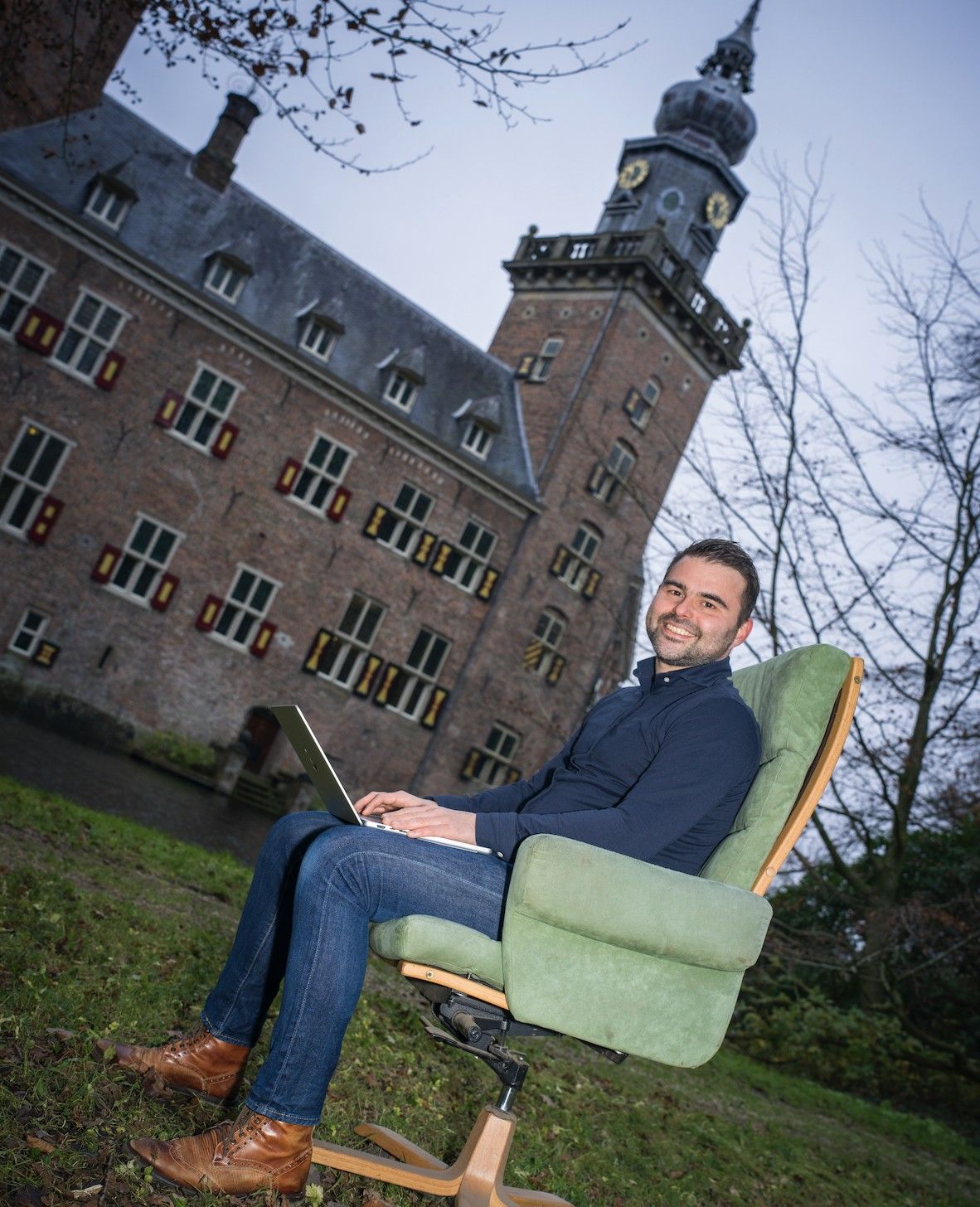
According to Dieter Vlaminck, PhD researcher at Nyenrode, the answer lies not in technology itself, but in the way people relate to their work. "The key to motivation lies in psychological ownership and meaning," he says. "Anyone working with AI needs to feel that they have influence over the result. Once technology takes over the work without leaving room for personal input, demotivation is right around the corner."
From maker to reviewer
An important shift that Vlaminck observes in organizations is the move from making to reviewing. Where professionals previously created, analyzed, or designed themselves, their role increasingly shifts to checking, adjusting, and approving AI-generated output. "The shift from makers to reviewers directly affects people's sense of ownership," says Vlaminck.
Work that mainly involves reviewing what a system has produced requires less personal engagement and leaves less room for craftsmanship. As a result, work can feel more distant — less "yours" — and therefore less motivating. For knowledge workers in particular — scientists, engineers, consultants, journalists, artists, and software developers — this development strikes at the core of their professional identity.
Self-configuration
For his doctoral research, Vlaminck studied how 82 knowledge workers across nine different fields navigate the rise of generative AI. Professionals turn out to do three things simultaneously when confronted with AI: they embrace it, they resist it, and they make their own rules — often all three within a single conversation.
These three movements together form what Vlaminck calls self-configuration: the active rewriting of your professional identity in response to a technology that can increasingly take over your work.
Movement 1: Embracing AI
Many professionals actively experiment with AI as a thinking partner. But that embrace has a downside: when AI disappoints, it feels personal. One participant described how she sat in her car yelling at ChatGPT after it repeatedly made factual errors.
That frustration reveals something important: professionals often approach AI as an equal human counterpart, and become frustrated when that expectation isn't met.
Movement 2: Rejecting AI
At the same time, professionals also draw sharp boundaries between themselves and AI. Some participants expressed shame and anger toward colleagues who use AI and therefore don't do the craft themselves. One attorney said she now finds herself happy to see typos in texts, because they prove that someone actually tried to write it themselves.
What professionals are doing in these moments is not so much evaluating AI, but defining what it means to be human. They emphasize what sets humans apart from AI: slow thinking, working through complexity, the pride of personal effort.
Movement 3: Making their own rules
Because organizational policies on AI use often lag behind technological developments, many people establish their own rules about what is acceptable. They draw a deliberate distinction between tasks they are willing to delegate (administrative work, routine actions, initial drafts of emails) and tasks they protect as inseparable from their craft: interpreting, analyzing, critical thinking.
One computer scientist put it concisely: "The thinking process has to stay with me. But the labor-intensive part can be outsourced. Ultimately, the human side must remain responsible."
AI as a mirror
What struck Vlaminck in his research is that the way someone talks about AI often reveals more about their own professional identity than about the technology itself. For example:
- Knowledge workers project human traits onto AI while simultaneously setting themselves sharply apart from it.
- Accounting researchers called AI a 'smooth liar'.
- Ethicists described it as 'a tempting shortcut'.
- Geologists and pharmacists, by contrast, saw AI as a 'third eye' — a welcome enhancement of their work.
Vlaminck calls this phenomenon the phantom other: AI functions as a kind of human presence that isn't really there. It can't talk back, can't claim recognition, and can't negotiate status. But precisely because of that absence, AI becomes a screen onto which professionals project their own insecurities, values, and boundaries. The act of defining limits becomes less about "where does AI end?" and more about "where do I begin?"
It's not convenience that motivates employees
"People don't get motivated because something is easy, but because they put in effort, grow, and experience success."
A common assumption is that working more efficiently automatically leads to greater job satisfaction. Vlaminck's research findings point to exactly the opposite. "People don't get motivated because something is easy, but because they put in effort, grow, and experience success," he explains.
When AI simplifies work processes to the point where employees are barely challenged, that sense of achievement disappears. This effect was strongest among professionals who build their identity around the process of work itself: the craft of writing, the struggle of data analysis, the gradual building of insight.
Several participants flatly refused to hand certain core tasks over to AI — even when that meant less sleep to meet a deadline. Doing the work themselves was a matter of professional integrity.
That's why Vlaminck advocates for a deliberate use of AI: not as a replacement for human work, but as a means of making work richer and more meaningful. That means giving employees the space to actively use AI, experiment with it, and make choices about how technology supports their craftsmanship. Only then does work remain something people can grow into.
From automation to augmentation
The central question for organizations should therefore not be "What can we automate?" but rather "How do we ensure that people remain in the driver's seat?" Vlaminck speaks in this context of a shift from automation to augmentation: AI as a technology that enhances human expertise rather than replacing it.
The strategy that many professionals already apply themselves offers a concrete starting point. It's about deliberately distinguishing between the aspects of work that shape identity (interpreting, judging, synthesizing, reflecting) and those that primarily serve productivity.
That distinction is not just a policy question. It's a deeper question about professional self-determination.
Human-centered leadership as the key
The way AI is introduced, Vlaminck argues, depends entirely on authentic, human-centered leadership. Leaders set the narrative: is AI a cost-cutting control tool, or a means of helping people become better at their work?
That starts with transparency about what AI can and cannot do, including openly naming the uncertainties and ethical dilemmas involved. The research shows that across all groups studied, the ethical dimension plays a prominent role. Even professionals who take a pragmatic stance toward AI wrestle with questions of fairness, transparency, and the value of personal effort. That moral layer deserves recognition in how organizations communicate about AI.
Not top-down AI policy, but a conversation
Another key finding is that professionals were already setting their own rules before AI came along — often with considerable nuance and professionalism. What they lack is not so much a list of dos and don'ts, but a professional vocabulary to articulate who they are in a world where AI can reproduce much of their output. Leaders who create space for that conversation — not as a compliance exercise, but as shared professional reflection — will get more out of their employees, more sustainably, than managers who impose top-down AI policies.
Investing in development is also crucial — not just in technical skills, but especially in the competencies where people most clearly distinguish themselves from AI: critical thinking, reflection, empathy, and creative problem-solving.
Technology that empowers people
Vlaminck's research closely aligns with Nyenrode's vision of leadership and organizational development. Technology is only truly valuable when it contributes to human potential, responsibility, and purpose. In that light, motivation is not a byproduct of innovation — it is the engine of it.
"Anyone working with AI should not only understand what the technology can do," Vlaminck concludes, "but also retain the space to remain the author of their own work."
Dieter Vlaminck is Digital Learning & AI Literacy Specialist at Nyenrode and chair of the AI & Education committee and advisory member of the Assessment Committee. He is also a PhD researcher studying human-AI collaboration, with a specific focus on psychological ownership and the impact of generative AI on professional identity and motivation.
Vlaminck is involved as a speaker and lecturer in several Executive Programs, including Sales and AI, Data Analytics and AI, and AI in Audit. In this role, he connects pedagogy, technology, and leadership to help organizations implement AI in a human-centered way.
Related programs
-
Modular Executive MBA in Business & IT
Start date: spring & autumnLanguage:- English
Location:- Breukelen
For professionals driving digital transformation. The Modular Executive MBA in Business & IT develops your expertise in AI, digital strategy, and IT leadership. A flexible, part-time MBA for experienced professionals.
View program
-
Business Value of Data and Technology
Start date: October 5, 2026 - October 4, 2027Language:- English
Location:- Breukelen
This module equips you with academic insights and practical tools to design IT and data capabilities that are truly fit for purpose.
View program
-
AI for Boards
Start date: November 17, 2026 (Dutch, FULL) and May 12, 2027 (Dutch)Language:- Dutch
Location:- Breukelen
AI is transforming how organizations create value, operate, manage, and make decisions. The challenge you face as a board member is how to strategically navigate these changes. In this program, you will discover what AI means in practical terms for your organization and your role as an executive, non-executive or supervisory board member.
View program
-
Business Ethics in context
Start date: September 23, 2027Language:- English
Location:- Breukelen
Understand the interfaces between market, law and ethics, and apply these perspectives directly to your own organizational case.
View program
-
Digitalization and Boardroom Dynamics
Start date: March 30, 2027Language:- English
Location:- Breukelen
Shows how digital transformation reshapes boardroom decision‑making. You learn to navigate boardroom dynamics, influence strategic discussions and pitch digital initiatives effectively.
View program
-
Management of AI and Cyber Security
Start date: April 6, 2027Language:- English
Location:- Breukelen
Learn how, as a CXO, you can steer and respond to what comes your organization’s way. Both the opportunities and the risks.
View program